Finding an ecommerce niche can feel a little backwards.
You’re expected to choose your products, picture your ideal customer, and maybe even name the store before knowing if anyone wants what you’re selling.
A lot of advice starts with one question: “What are you passionate about?”
Your interests do matter. You’ll spend a lot of time thinking about these products and the people buying them. It helps if you actually care.
But before you spend six months building a store or order 300 custom mailers, check whether other people care too.
Are they searching for the product? Buying similar versions? Complaining about the ones already available?
Those are the clues that can lead you to a profitable ecommerce niche.
First, what is a niche?
A niche is a specific part of a larger market. It focuses on a particular customer, product, or need.
“Pet products” is a broad market. “Personalized memorial prints for people who have lost a pet” is a niche.
You know who the customer is, what they’re buying, and why they want it.
That makes a lot of future decisions easier. You have a clearer idea of what to sell, how to talk about it, and why someone might choose your store.
So, where do you find a niche like that?
Start with what people are already searching for
You don’t have to invent a niche from scratch.
Start with a broad product idea and see what people are already looking for.
Take phone cases.
There are thousands of them, so selling “phone cases for people with phones” isn’t giving anyone a reason to care.
Search Google for “best phone case for…” and see what suggestions come up. Try the same thing on Amazon, Etsy, or the marketplace your customers are likely to use.
You’ll find searches for:
- Waterproof phone cases for kayaking
- Extra-grippy phone cases for runners
- Personalized phone cases featuring specific pet breeds
- Heavy-duty phone cases for people working outdoors
Now you have more than just a product idea.
A kayaker wants protection from water. A runner wants a case that won’t hit the pavement halfway through a run. Someone working outdoors will care more about durability than having the thinnest phone case known to humankind.
The more specific the search, the more it tells you about what to sell and how to position it.
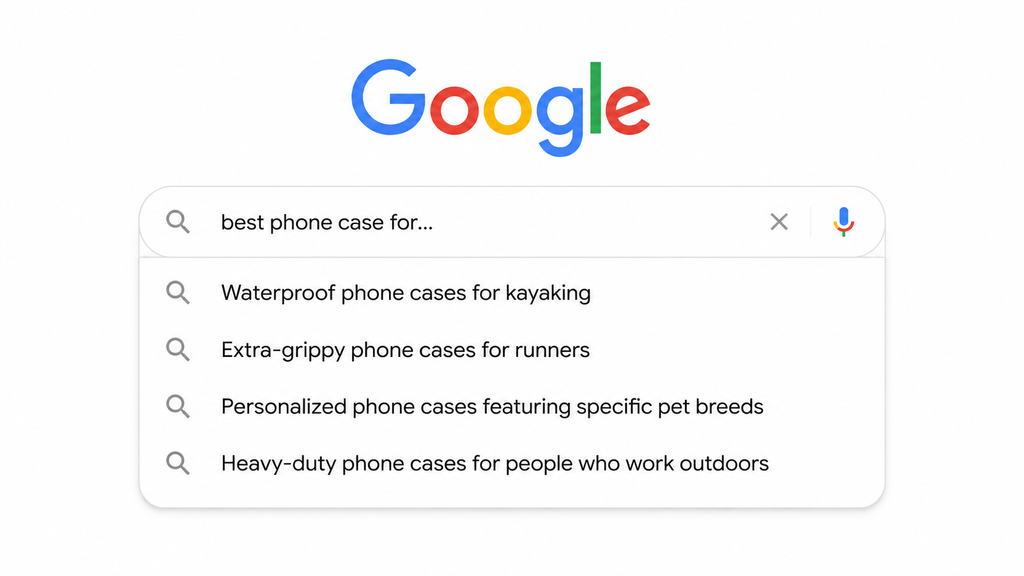
Google’s autocomplete suggestions can reveal the specific products people are already searching for.
Check whether people are interested in the idea
Once you have a few ideas, look them up on Google Trends.
Google Trends shows whether interest in a search term is growing, holding steady, dropping, or changing with the seasons.
Then change the date range to the past five years. The standard 12-month view can make an idea look way more exciting than it is because the product had one very good week on TikTok.
Look at the graph and ask:
- Has interest grown over time?
- Does it stay fairly consistent?
- Does it rise during certain months?
- Was there one sudden spike followed by a drop?
- Which countries or regions show the most interest?
Seasonal demand isn’t a bad sign. People will always search for Christmas ornaments closer to Christmas. You just need to know when interest starts rising so you can prepare before everyone already has a tree up in their living room.
Compare similar phrases too.
People could be searching for “pet memorial gift” more often than “pet remembrance gift,” even if they mean the same thing. The wording customers use can help you write better product titles and descriptions later.
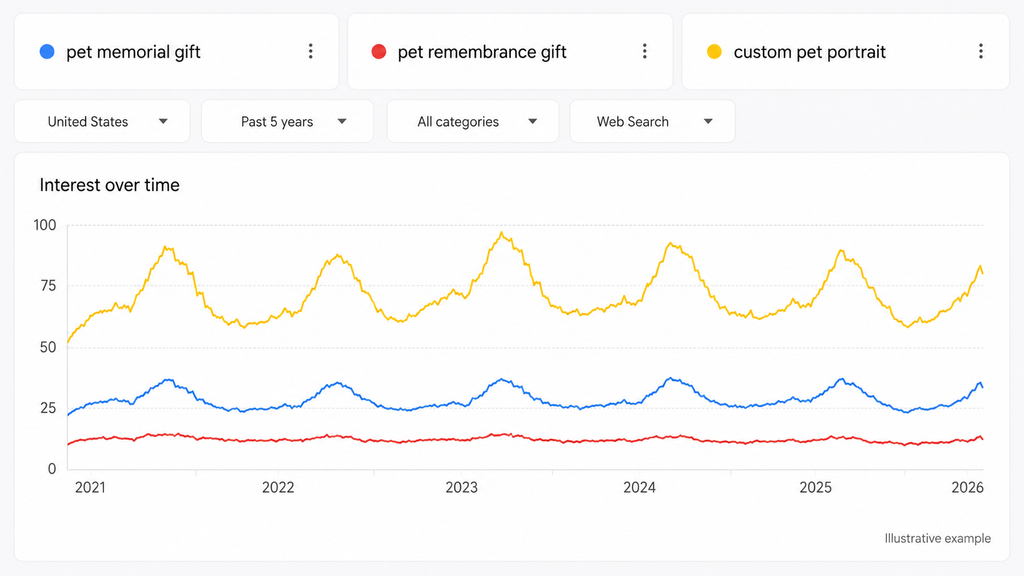
Comparing similar phrases can reveal the wording customers use and whether interest is growing, steady, or seasonal.
Read what customers say about the current options
Searches show you what people want. Reviews tell you where the current products are letting them down.
Look up popular products in your niche on all the relevant marketplaces. Read the glowing five-star reviews, the angry one-star reviews, and especially the mid three-star reviews.
Three-star reviews are really useful. The customer liked the product enough to buy it, but something went wrong, and they’re often very willing to tell you exactly what it was.
Maybe customers like the idea of personalized pet prints but keep mentioning that:
- Their photos printed badly
- Personalizing the product was confusing
- The print looked cheaper than it did online
- Delivery took too long
- There weren’t enough sizes or frames
- The designs felt outdated or overly sentimental
One angry review doesn’t prove you’ve found a gap in the market though. Someone could’ve uploaded a blurry photo from 2007 and expected it to come back looking HD.
Look for the same complaint across different products and stores.
If customers keep asking for more sizes, simpler designs, or faster delivery, you found a problem worth solving.
Positive reviews matter too because they tell you what buyers already value. If people keep praising the thick paper, accurate colors, and easy personalization, you probably don’t need to reinvent those parts. Focus on the bits that are causing frustration.
Don’t panic when you find competitors
Finding established stores in a niche can feel like arriving late to the party.
It also tells you that people are already spending money on this type of product.
A niche with no competition could be an untapped opportunity. But it could be empty because nobody wants the product. You’ll need to dig a little deeper before ordering the balloons.
Choose five to ten stores selling similar products and compare:
- Their most-reviewed products
- Prices
- Delivery times
- Personalization options
- Product photos
- Available styles, colors, and sizes
- What customers love or complain about
- Anything that seems to be missing
Look beyond the biggest store. Smaller sellers may be serving a very specific customer or trying product styles that larger brands haven’t noticed yet.
Give customers a reason to choose your store
You don’t need to invent a product the world has never seen before. You need to give customers a clear reason to buy your version.
That reason could be:
- A style that’s hard to find elsewhere
- More personalization options
- Better sizes, colors, or materials
- Faster production
- Easier ordering instructions
- Shipping to places other sellers don’t cover
- A product designed for a more specific customer
Let’s go back to the pet memorial example.
Maybe most stores sell bright illustrated portraits, while reviews show that some customers want something simpler that fits the rest of their home.
You could offer minimalist black-and-white memorial prints with several sizes and frame options. The product itself is familiar, but the style and customer are much clearer
Check whether the product can actually make money
A product can be wildly popular and still leave you with very little profit. So before you get too attached to an idea, work out what each sale will cost you.
Start with the selling price, then subtract:
- The cost of making or buying the product
- Packaging
- Shipping
- Marketplace fees
- Payment-processing fees
- Advertising
- Discounts
- Returns and replacements
Say you sell a personalized print for $40.
It costs $12 to make and $8 to ship. Another $7 goes toward fees and advertising. You’re left with $13 before paying any of your other business expenses.
That $40 sale suddenly looks a lot less.
This doesn’t mean you should drop the product. You could charge more, find another supplier, offer larger sizes, add matching products, or create bundles that raise the value of each order.
Think about what the customer would want to add extra. Someone buying a pet memorial print could also want a frame or extra copies for family.
The selling price is the exciting number. The amount left after every cost has been paid is the useful one.
Test the idea before buying a mountain of stock
Please don’t order a warehouse full of stock because three friends said they’d “totally buy that.”
Friends are supportive. Order data is honest.
Print on demand, dropshipping, preorders, and made-to-order fulfillment can help you test a niche without committing to a massive inventory.
Start with a small collection of five to ten related products or designs.
For the pet memorial store, that might include:
- Three print styles
- Two frame options
- Several common sizes
- One optional personalization upgrade
Keep the first collection focused.
If you launch phone cases, dog blankets, wedding invitations, mugs, and motivational gym shirts at the same time, you’ll probably make a few sales, but you won’t learn much from them because every product serves a totally different customer.
A smaller, related collection makes it much easier to see which products, styles, and options people actually want.
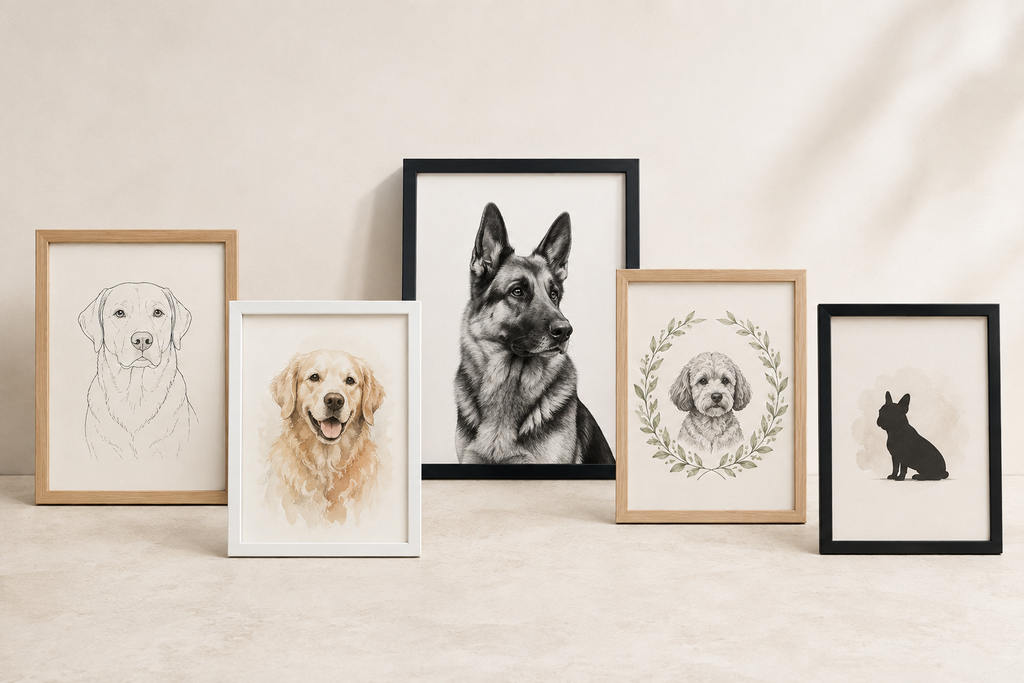
Start with a small collection so you can learn what customers prefer before expanding.
Let your orders tell you what’s working
Once orders start coming in, pay attention to what customers actually choose.
Which products sell? Which sizes and designs are popular? What gets returned? Which products still leave you with a decent profit after all the costs?
Your bestseller isn’t always your best product. It could sell constantly and still make very little after production, shipping, and returns.
Where the product sells matters too. A personalized item may struggle on your website but do well on Etsy, where people are already looking for gifts.
This gets harder to follow when your orders are spread across Shopify, Amazon, and other sales channels. Order Desk brings those orders into one place and uses rules to send each product to the correct fulfillment service.
That makes it easier to see what’s selling and saves you from jumping between dashboards to check whether order #4287 ever reached the printer.
Give the niche a fair shot
You don’t have to marry your first product idea. But you do need to give it enough time and traffic to actually mean something.
Ten visitors and zero sales tells you nothing. One order from your mom tells you even less.
Before you launch, decide how long you’ll test the idea, how you’ll promote it, and which results you’ll track.
If one design, size, or product keeps selling, build on it. Add more designs in a similar style. Test another size. Improve the photos. Create a bundle. Ask customers for their feedback.
If nothing sells, check the rest of the buying experience before scrapping the idea.
Confusing descriptions, expensive shipping, weak photos, or barely any promotion can make a good product look like a really bad idea.
Change one important thing at a time, then test again. If demand still doesn’t appear, move on. You learned something before spending even more money on an idea that wasn’t working which is exactly what a good test should do.
How to find a niche FAQs
How do I know if my niche is profitable?
Look for signs that people already spend money on similar products. Check marketplaces, read customer reviews, study competing stores, and use Google Trends to see whether people are searching for the idea.
Then launch a small test. People saying they like your product is encouraging. An actual order tells you much more.
Can I change my niche later?
Of course! You’re choosing a starting point, not signing a lifetime contract.
As orders come in, you discover that one product, style, or customer group performs much better than everything else. Use that information to narrow your niche, add related products, or move in a different direction.
How long does it take to find a profitable niche?
There isn’t a set timeline. It depends on how quickly you can research the market, launch a small test, and attract enough potential customers to learn from the results.
A handful of website visits won’t give you enough information. Decide how long you’ll run the test and how you’ll bring people to the store before you judge the idea.
What’s the difference between a niche and a sub-niche?
A niche is a smaller section of a broad market. A sub-niche narrows that idea even further.
For example:
- Market: Pet products
- Niche: Personalized pet gifts
- Sub-niche: Minimalist memorial prints for people who have lost a pet
The more specific you are, the easier it is to understand the customer and create a product that feels made for them. Just make sure the audience is still large enough to support your business.
Should I choose a niche based on passion or profit?
Choose something you’re genuinely interested enough to keep working on, then check whether people are willing to pay for it.
Search data, marketplace sales, reviews, and small product tests can help you confirm demand. Enjoying the idea will keep you interested. Customers buying it will keep the store running.